1M+
trips completed
Product manager. Two products I owned end to end, walked through the way I actually think about them: the problem, the calls, the numbers.
I'm the Head of Product at Kabba Transport, a software company working to change public transit across emerging markets in Africa. I joined as employee number 3 and, over the past 5 years, have owned product across our rider, driver, and operator apps, growing it into a platform that has now completed over a million trips for 100+ of the region's biggest companies.
I did not take the obvious path to get here. Coming out of school I had offers from Fortune 500 companies, and they were good ones. I turned them down because I wanted to work on a genuinely hard problem I had grown up around, and I was willing to take the risk on a young African startup to do it. It is the best bet I have made. On the weekends I built LinQ, free software for student transport operators in Minnesota.
Two products I owned end to end, each walked through the same frame: the problem, how I validated it, the options I cut, what shipped, the numbers, and what I would change. Context: Kabba is shared mass transit built as a subway on minibuses, with fixed routes and monthly subscriptions. We launched first in Addis Ababa, one of Africa's fastest growing cities, where millions commute every day on an informal minibus network that was never designed for them. It was the sharpest version of the problem we set out to solve, so it was the right place to prove the model.

How I turned employee commuting into Kabba's highest margin product. The full arc, the way I would walk a hiring manager through it: the problem, the research, the options I killed, what shipped, and what moved.
I kept seeing the same pattern in our ridership data: clusters of riders leaving the same office parks at the same time, many reimbursed by their employer. Digging in, I found companies were quietly running their own staff transport, renting buses, hiring drivers, and eating the safety complaints and no-shows themselves. It was expensive, off-mission, and a liability nobody wanted to own.
So I went and asked. I sat with 30 HR and operations leaders across 20 companies. The line that reframed the product came from an HR director who told me, plainly: "I don't want to be in the transportation business. I want my people to show up on time and I want the risk off my desk." They were not buying vehicles. They were buying attendance and peace of mind.
B2C revenue swung with weather, fuel, and paydays. Corporate contracts were the opposite: recurring, predictable, and high margin, and every company that signed anchored a route with guaranteed daily riders, which made the B2C service on that route more reliable too. One sale improved two products. That is the kind of leverage worth chasing.
I wrote the specs and worked daily with six engineers, the operations team on route capacity, and finance on billing, and I presented the tier directly to client HR leaders and to our own executive team. We shipped in three parts:
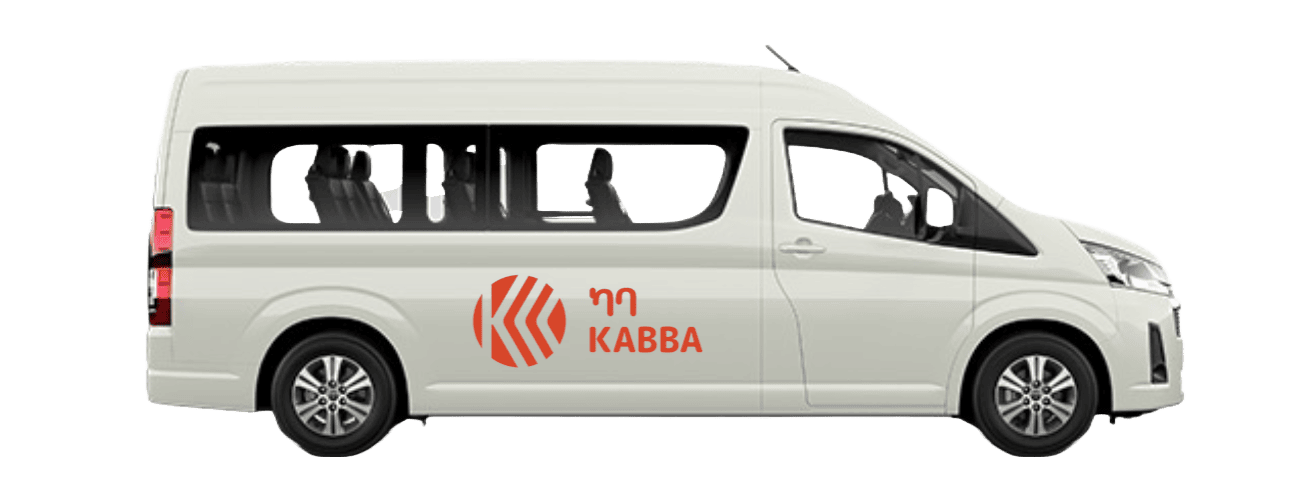
Piloted with one anchor client of about 200 employees, then rolled out over roughly 18 months to a core book of business.

A side project I could not put down, and proof I can take a product from a real problem to a shipped, adopted tool on my own. Small operators move thousands of kids in seven-seater vans on paper and phone calls. I built them the software the big yellow-bus vendors never bothered to.
"Type 3" operators run seven-seater vans for school districts, and they are invisible to the software market: too small for the big yellow-bus vendors to bother with. So they run routes on spreadsheets, sticky notes, and phone calls. And parents have zero visibility, no idea where their child is between home and school. I saw it up close, operators in my own community, family included, drowning every morning.
I sat with about 12 operators and rode along on the morning run. The real job was not the "route optimization" the big tools sell. It was two smaller, sharper things: the dispatcher knowing exactly who is on which van right now, and the parent knowing their kid is safe. Everything else was noise on the one morning that mattered.
We can track a package across an ocean. A kid on the way to school should not be harder to find than that.
Four habits under everything above. The domain keeps changing. These do not.
I want to give the next hard problem the same care I gave this one: close to the people who feel it, inside a team building something that matters. If that is your team, I would like to talk.
B.S. Computer Science
Metro State University · Dean's List
Wings Transportation · software engineer intern (2019 to 2021). Built routing and driver-assignment tools for a ~200 driver fleet. Where I learned how dispatch really works.
Africa Startup of the Year, nominee · urban mobility
MLT Fellow · leadership in business and tech
Nahom's HQ, an AI ops dashboard with two Claude agents that run my weekly reporting. I like building the tools I wish existed.